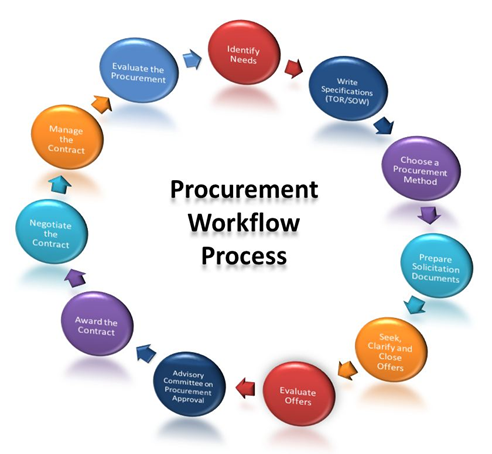
PROCUREMENT


Supply Chain Management:

Identifying and qualifying reliable suppliers and vendors that can meet the project's technical, quality, and delivery requirements.

Developing and maintaining a robust supply chain network, including the coordination of logistics, transportation, and inventory management.

Implementing strategies to mitigate supply chain risks, such as disruptions, delays, and price fluctuations.

  • Material and Equipment Procurement:

    Specifying the appropriate materials, equipment, and components required for various project phases, based on technical specifications, industry standards, and project requirements.

    Negotiating competitive pricing and favorable contract terms with suppliers, while ensuring the timely delivery of materials and equipment.

    Managing the procurement process, including the preparation of requests for proposals (RFPs), bid evaluations, and contract awards.

  • Services Procurement:

    Identifying and procuring specialized services, such as engineering, construction, maintenance, and project management, to support the various phases of the project lifecycle.

    Negotiating service-level agreements (SLAs) and performance-based contracts to ensure the quality and reliability of the services provided.

    Coordinating the integration of different service providers to ensure seamless project execution.

  • Compliance and Regulatory Requirements:

    Ensuring compliance with industry regulations, such as those set by organisations like the American Petroleum Institute (API) and the International Organization for Standardization (ISO), as well as local and national laws.

    Implementing procurement policies and procedures that align with the organization's ethical, safety, and environmental standards.

    Maintaining up-to-date knowledge of changes in regulations, industry standards, and best practices to adapt procurement strategies accordingly.


  • Digital Transformation and Automation:

    Leveraging advanced technologies, such as electronic procurement platforms, data analytics, and automation tools, to streamline the procurement process and enhance decision-making.

    Integrating procurement systems with other project management and enterprise resource planning (ERP) systems to improve data-driven decision-making and supply chain visibility.

    Fostering a culture of continuous improvement and innovation within the procurement function to drive operational efficiency and cost optimization.


    Effective oil and gas procurement expertise requires a combination of technical knowledge, commercial acumen, and strategic thinking. By maintaining a robust procurement function, our organizations can ensure the timely and cost-effective delivery of materials, equipment, and services, ultimately contributing to the successful execution of their projects.